

Routing
Vulcx evaluates multiple paths to find the best execution for every swap.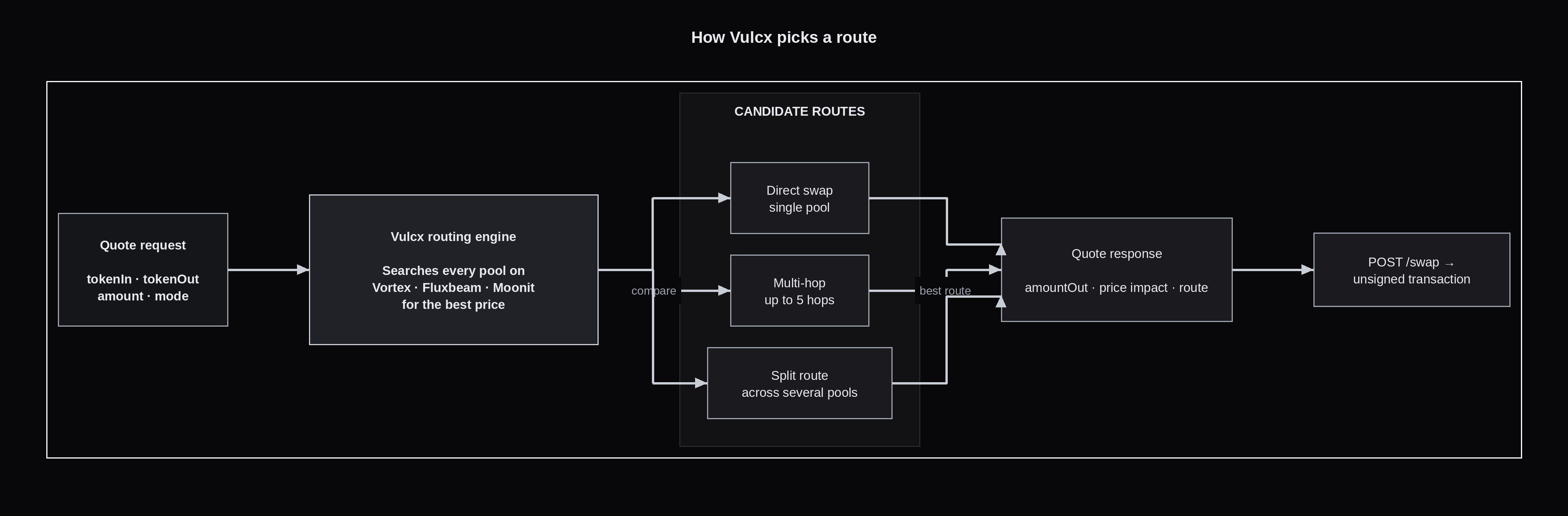
A quote request goes into the routing engine, which compares direct, multi-hop, and split routes across every pool and returns the best-price quote.
Direct swaps
For common pairs with deep liquidity (e.g., FOGO/USDC), a single pool often provides the best price. Vulcx compares rates across all supported pools and picks the one with the lowest price impact.Multi-hop routing
When a direct swap isn’t optimal, Vulcx routes through intermediate tokens. For example, swapping Token A → Token B might execute as:Supported liquidity sources
Price impact
Every quote includes price impact data:Slippage protection
TheslippageBps parameter sets the maximum acceptable price deviation. If the on-chain execution price is worse than the threshold, the transaction reverts atomically. No partial fills.